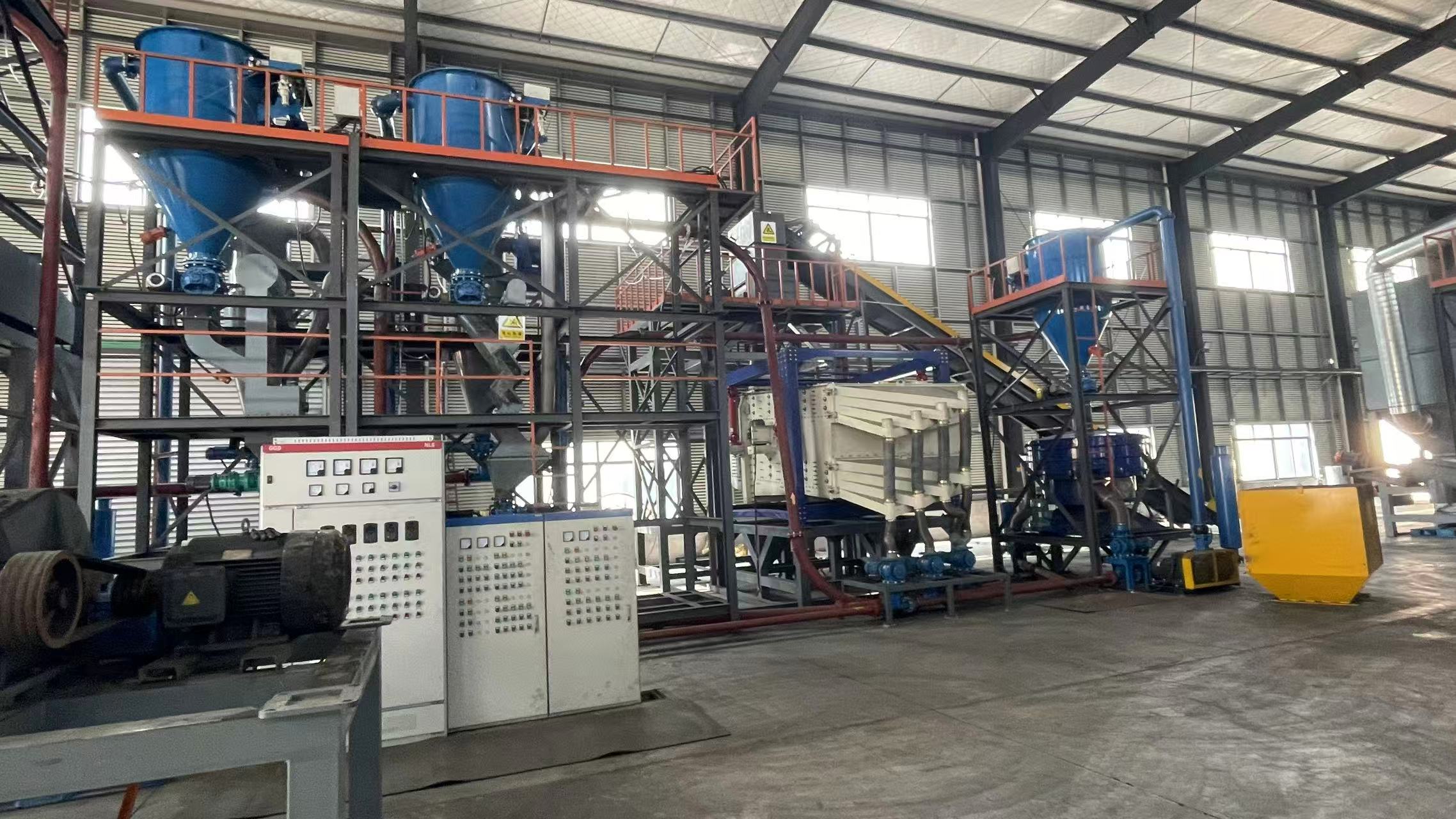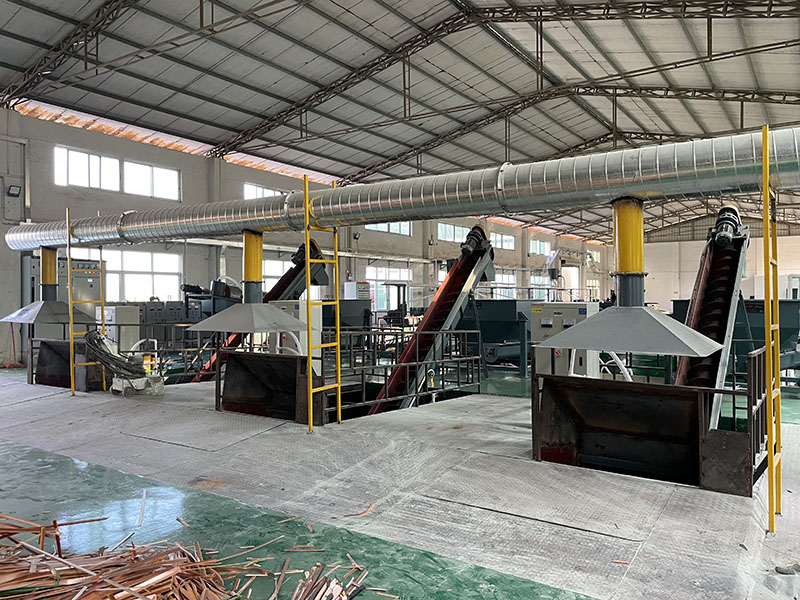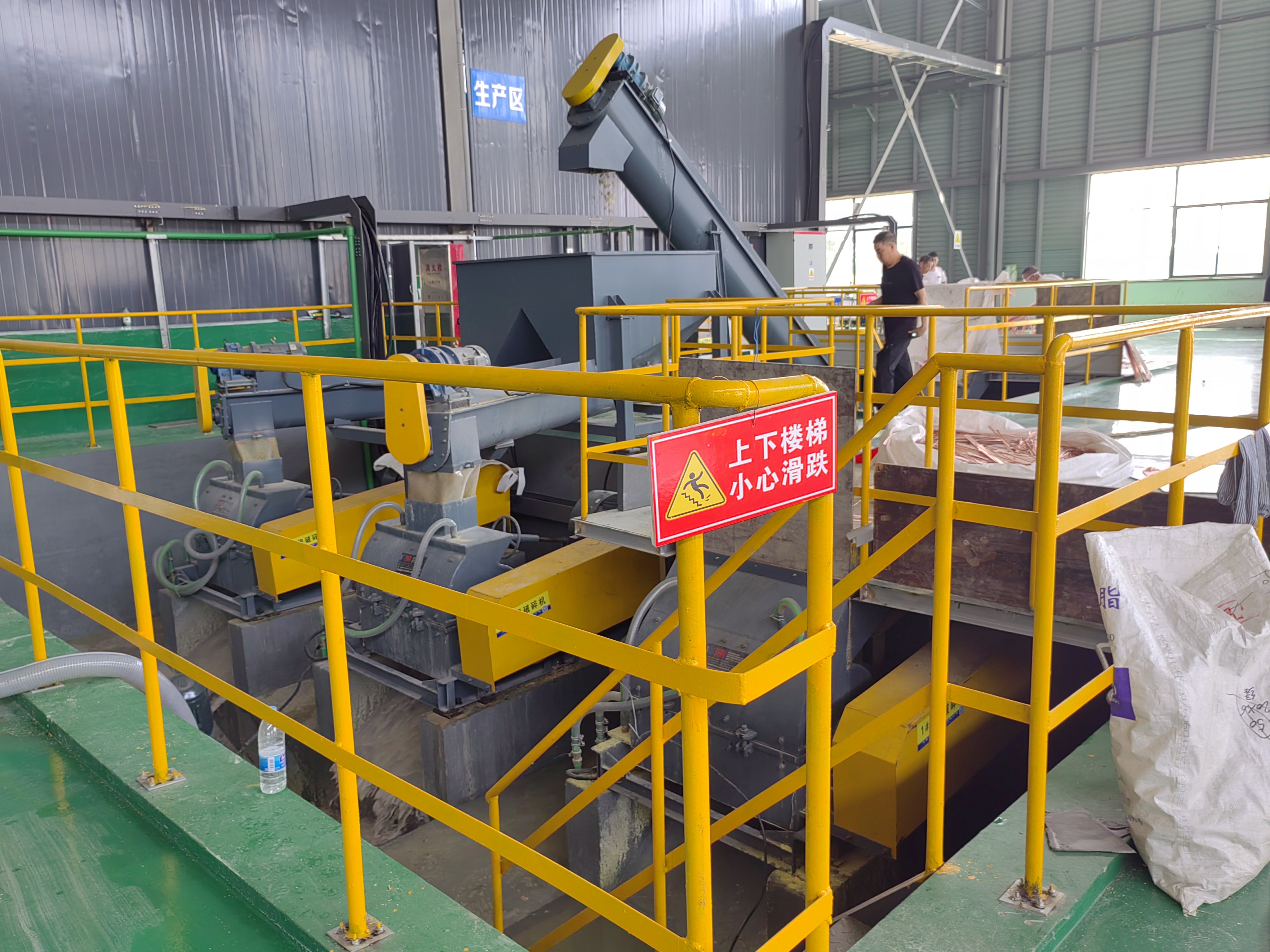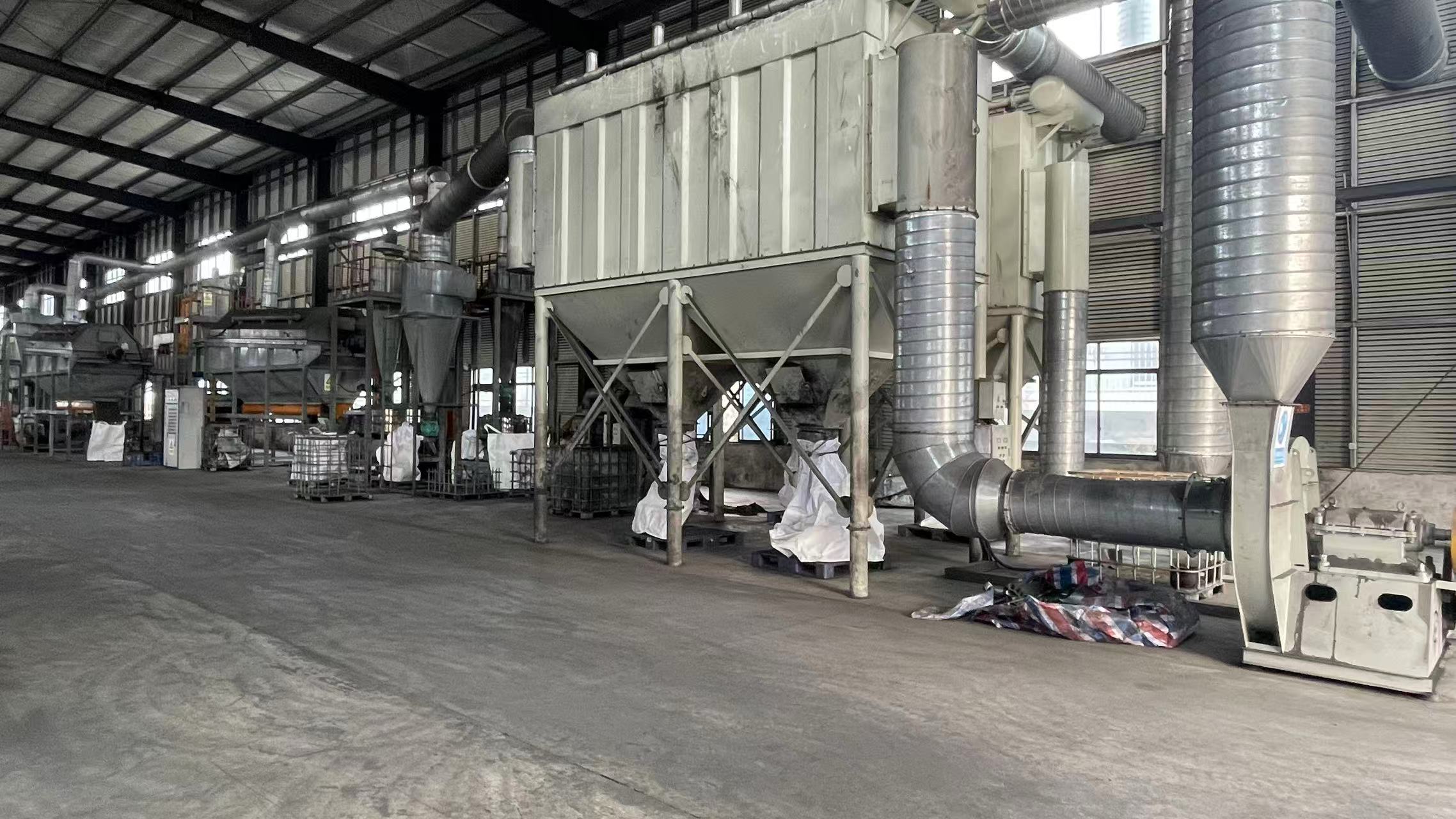

500 Kg/h Lithium battery recycling machine in China
Equipment Overview
The 500 kg/h lithium battery recycling machine is an automated production line specialized in processing waste lithium batteries. It can process 500kg of various types of waste lithium batteries (including ternary lithium batteries, lithium iron phosphate batteries, mobile phone batteries, and power batteries) per hour. Through multi-stage crushing, sorting, and environmental protection treatment, it achieves efficient recycling of copper, aluminum, and positive and negative electrode materials (black powder) in lithium batteries, with a recovery rate of 96-99%.
Core technical parameters
Typical numerical description of parameter items
Processing capacity of 500kg/h meets the production capacity requirements of medium and large recycling enterprises
The equipment power of 185-361kW depends on the configuration (such as 225kW for TLB-500 type and 361kW for SM-LDC500 type)
The equipment size is approximately 15 × 6.5 × 6m (standard type) and covers an area of approximately 100 square meters
The weight of the equipment is approximately 30-50 tons, depending on the material and configuration
Black powder recovery rate ≥ 96%, positive and negative electrode material recovery efficiency
Copper and aluminum recovery rate ≥ 97%, maximizing the utilization of metal resources
Dust emissions<20mg/m ³ are much lower than the national standard (≤ 120mg/m ³)
Processing various types of waste lithium batteries, ternary, iron lithium, cylindrical, soft packaging, etc
The degree of automation is fully automatic (PLC control), reducing manual intervention and improving safety
Detailed explanation of process flow
one ️⃣ Preprocessing stage
Safe discharge: Release residual energy from the battery by soaking it in salt water or using a dedicated discharge machine to prevent short circuits and fires
Feeding and conveying: The chain plate conveyor sends the battery into the primary shredder
two ️⃣ Crushing stage
First level shredding: The dual axis crusher shreds the battery into 2-3cm strips
Secondary crushing: Hammer crusher further crushes to 5-8mm particles
Third level crushing: The turbine mill refines the material to 3-5mm, achieving separation of metal and powder
three ️⃣ Sorting stage (core stage)
Magnetic Separation: Separating Ferromagnetic Substances
Gravity sorting: using negative pressure and a "Z" type separator to separate the shell (recovery rate ≥ 98%)
Airflow sorting: Separate copper (heavy), aluminum (medium), and diaphragm (light) based on density differences
Screening: Drum screen separates positive and negative electrode powders according to particle size (mesh size 100-120)
four ️⃣ Environmental Protection Treatment System
Third level dust removal: cyclone dust removal → pulse dust removal → activated carbon adsorption to ensure dust meets standards
Waste gas treatment: spray tower+catalytic combustion, VOCs removal rate>99.5%
Wastewater recycling: achieving "zero wastewater discharge" and meeting environmental protection requirements
Comparison of technical routes
At present, there are three main technical routes for 500kg/h lithium battery recycling machines on the market:
Technical roadmap, principles, advantages, disadvantages, applicable scenarios
The physical crushing method, which involves pure mechanical crushing and sorting, has a low investment (3-8 million yuan) and low energy consumption. It is only suitable for small batteries and has a high risk of handling power batteries. It is also suitable for recycling small batteries such as mobile phones and power banks
Low temperature pyrolysis method with 200-300 ℃ anaerobic environment pyrolysis+sorting has high safety, high processing efficiency, 30% high profit of power batteries, high investment (10-30 million yuan), high energy consumption, power battery recycling, and pursuit of high purity
The combination of wet and dry physical crushing, pyrolysis, and wet purification has the highest recovery rate (≥ 99%), high product purity, complex process, and highest investment. It requires high-end recycling of wastewater treatment and pursues battery grade raw materials
Note: 500kg/h equipment often adopts a combination of physical and pyrolysis processes, balancing efficiency and safety
Investment return analysis
economic performance:
Investment scale: Approximately 5-8 million yuan for 500kg/h standard equipment (physical method); Thermal decomposition type costs about 10-15 million yuan
Operating costs:
Electricity: Approximately 185-361kWh/hour (depending on configuration)
Manual: 3-5 people/shift (can be reduced to 1-2 people in fully automatic mode)
Replacement of vulnerable parts: approximately 50000 to 100000 yuan per year
Recycling income:
Each ton of waste lithium batteries can recycle about 150kg of copper (worth about 120000 yuan/ton)
70kg aluminum (valued at approximately 14000 yuan/ton)
200kg black powder (containing lithium, cobalt, etc., valued at approximately 30000 to 80000 yuan/ton)
The comprehensive recycling value of waste batteries is about 160000 to 220000 yuan/ton
Return cycle: about 18 months for pyrolysis method; Physical methods take approximately 12-15 months (depending on the source of raw materials and market prices)
Environmental benefits:
Reduce heavy metal pollution and protect groundwater resources
Reduce dependence on primary minerals and realize the value of "urban mines"
Reduce CO ₂ emissions and contribute to carbon neutrality goals
Key points and precautions for purchasing
one ️⃣ Clearly handle requirements
Confirm the main types of batteries being processed (ternary, lithium iron, consumer or power batteries)
Assess future business expansion space, considering device compatibility and scalability
two ️⃣ Technical route selection
Handling power batteries: prioritize pyrolysis or wet dry combination for higher safety and recovery rate
Dealing with small batteries: Physical methods offer higher cost-effectiveness
Pursuing high purity: choosing a comprehensive process with wet purification
three ️⃣ Comparison of key indicators
Recovery rate: Black powder ≥ 96%, copper and aluminum ≥ 97% are high-quality standards
Energy consumption: should be less than 200kWh/ton of waste batteries, the lower the better
Environmental indicators: Dust<20mg/m ³, VOCs removal rate>99.5%
Stability: Evaluate the continuous operation time and failure rate of the equipment
four ️⃣ after-sales service
Installation, debugging, and training services
Warranty period (usually 1 year) and maintenance response time
Supply of vulnerable parts and technical upgrade support
Policy support and industry prospects
Policy environment:
The "Industry Standard Conditions for Comprehensive Utilization of Waste Power Batteries in New Energy Vehicles" issued by the Ministry of Industry and Information Technology clearly require recycling enterprises to have professional processing equipment
The environmental protection department stipulates that those engaged in lithium battery recycling must obtain a hazardous waste management license and a record of renewable resource recycling operations
Multiple regions have introduced subsidy policies to support the development of the lithium battery recycling industry
Market prospects:
It is expected that the global lithium battery recycling and processing capacity will exceed 1.8 million tons by 2025, with a market size of 3.5 billion US dollars
The Chinese market accounts for over 55% and has become a global core
500kg/h equipment has become the preferred choice for small and medium-sized recycling enterprises due to its moderate production capacity and investment scale
Reminder: Environmental impact assessment, safety assessment, and hazardous waste permit application must be completed before investment to ensure compliant operation
summary
The 500 kg/h lithium battery recycling machine is currently the ideal choice for small and medium-sized lithium battery recycling enterprises, which can meet the recycling needs of a certain scale while maintaining moderate investment and operating costs. When selecting, the appropriate technical route should be chosen based on the type of material being processed, budget, and long-term planning, with priority given to the equipment's recovery rate, energy consumption, and environmental indicators. With the rapid development of the new energy industry, the lithium battery recycling market has broad prospects, and 500kg/h equipment will become an important equipment for the development of "urban mines".

No. 15 Industrial Avenue, Industrial Park, Shicheng County, Jiangxi Province
top