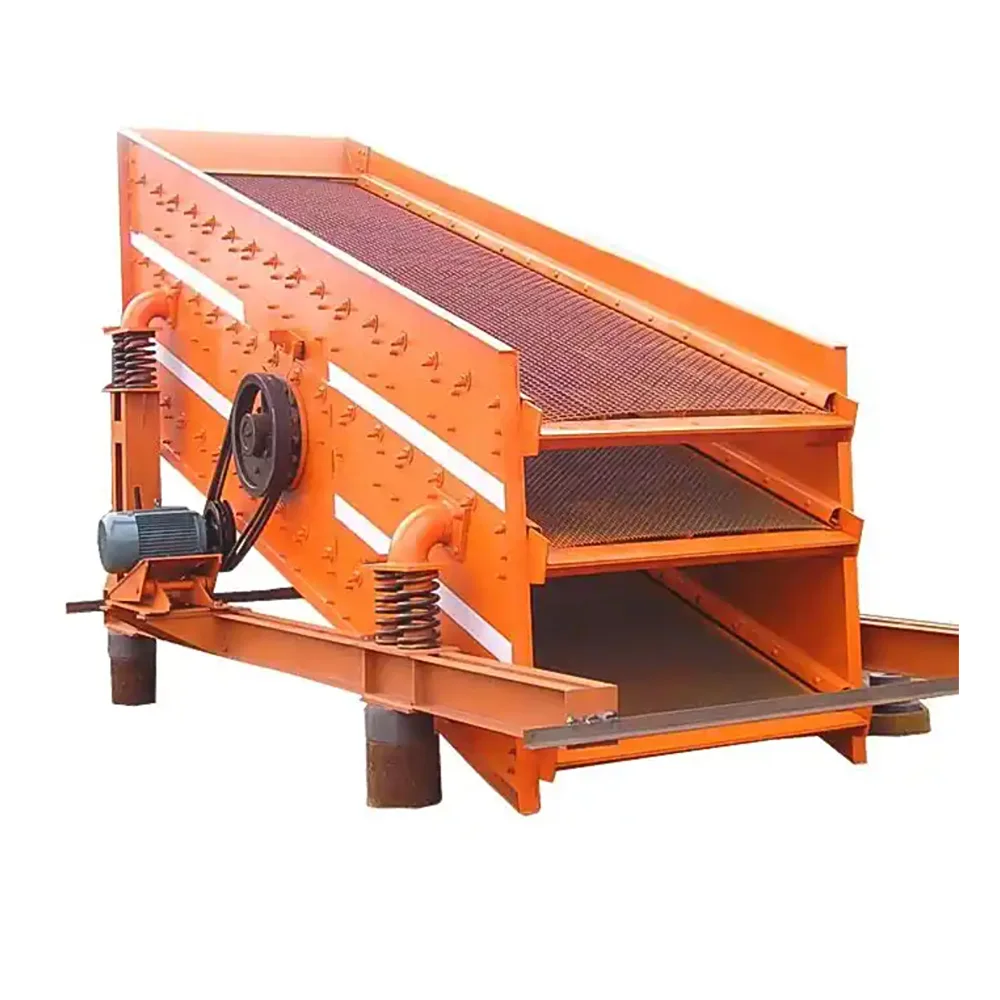
A vibrating screen works by utilizing the reciprocating rotary vibration generated by the vibrator. The upper rotating weight of the vibrator causes the screen surface to produce planar circular vibra...

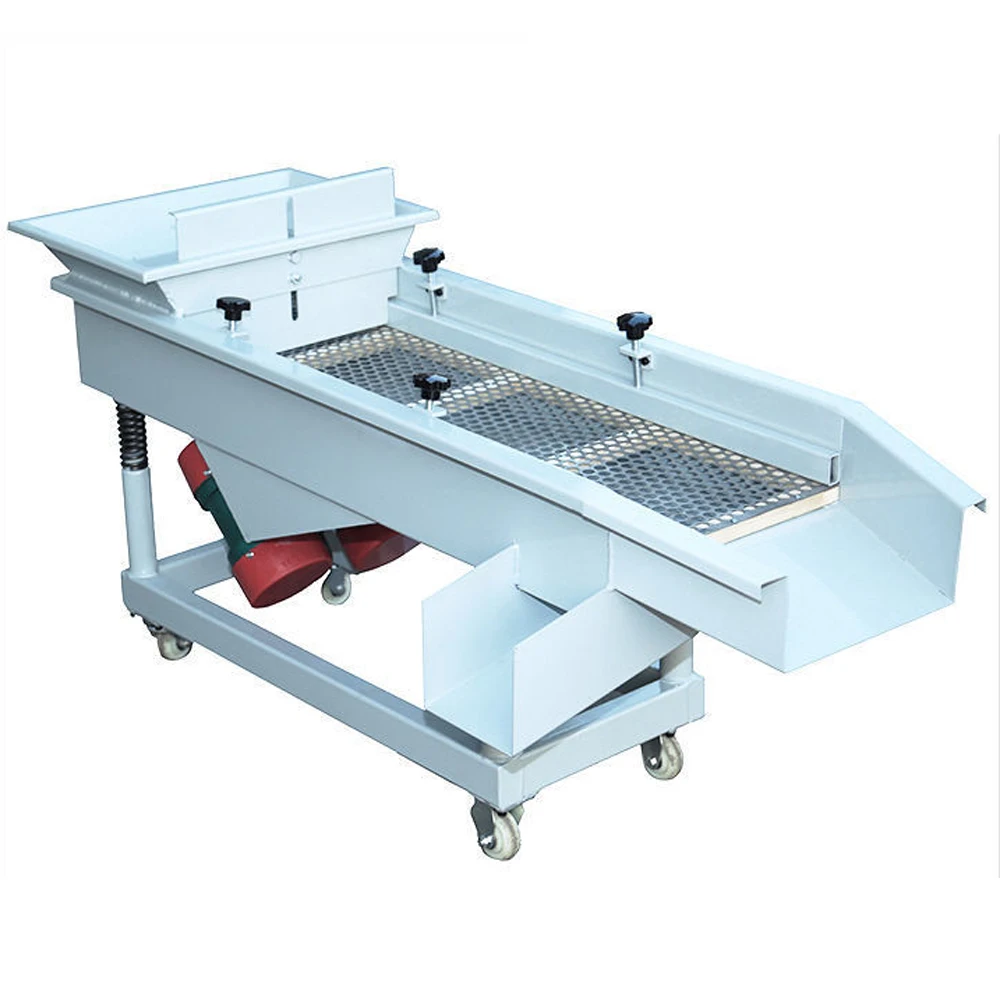
A vibrating screen works by utilizing the reciprocating rotary vibration generated by the vibrator. The upper rotating weight of the vibrator causes the screen surface to produce planar circular vibration, while the lower rotating weight generates conical rotational vibration on the screen surface. The combined effect of these two results in a complex rotary vibration on the screen surface, with its vibration trajectory forming a complicated spatial curve. The projection of this curve on the horizontal plane is a circle, while on the vertical plane, it appears as an ellipse. By adjusting the excitation force of the upper and lower rotating weights, the amplitude can be altered. Modifying the spatial phase angle between the upper and lower weights changes the shape of the screen surface’s motion trajectory and influences the movement path of the material on the screen.
Working Principle
The material on the screen surface moves toward the discharge end at a certain speed while undergoing sieving simultaneously. Compared to other types of screens, the vibrating screen boasts higher productivity and screening efficiency. Its main drawback is poor dynamic balance. For this reason, it is rarely used in general mineral processing plants and has largely been replaced by vibrating screens with more rational structures.
Additional Notes
1. Due to the intense vibration of the screen box, material clogging the screen openings is reduced, giving the screen high screening efficiency and productivity.
2. Simple in construction, with convenient screen surface replacement.
3. Low power consumption per ton of material screened.
Technical parameters are for reference only; actual design shall be based on customer requirements.
| Model | Screen Size (mm) | Mesh Opening Size (mm) | Number of Screen Decks | Feed Size (mm) | Processing Capacity (t/h) | Motor Power (kW) | Equipment Weight (t) |
|---|---|---|---|---|---|---|---|
| YA1030 | 1000×3000 | 5-50 | 1-4 | 60 | 20-30 | 3 | 1.8 |
| YA1230 | 1200×3000 | 5-50 | 1-4 | 60 | 30-50 | 5.5 | 2.6 |
| YA1245 | 1200×4500 | 5-50 | 1-4 | 60 | 30-70 | 7.5 | 3.1 |
| YA1540 | 1500×4000 | 5-50 | 1-4 | 60 | 40-90 | 15 | 5.3 |
| YA1548 | 1500×4800 | 5-50 | 1-4 | 60 | 50-120 | 15 | 6 |
| YA1848 | 1800×4800 | 5-80 | 1-4 | 80 | 60-160 | 18.5 | 6.9 |
| YA1860 | 1800×6000 | 5-80 | 1-4 | 80 | 70-250 | 18.5 | 7.7 |
| YA2160 | 2100×6000 | 5-100 | 1-4 | 100 | 100-350 | 22 | 9 |
| YA2470 | 2400×7000 | 5-120 | 1-4 | 120 | 150-500 | 30 | 13 |

No. 15 Industrial Avenue, Industrial Park, Shicheng County, Jiangxi Province
top